Best Jazz Clubs in Kreuzberg & Neukölln | Berlin Jazz Guide
From Yorckschlösschen's 125-year tradition to Donau115's 75-square-metre micro bar, Kreuzberg and Neukölln are home to Berlin's most vital jazz scene.
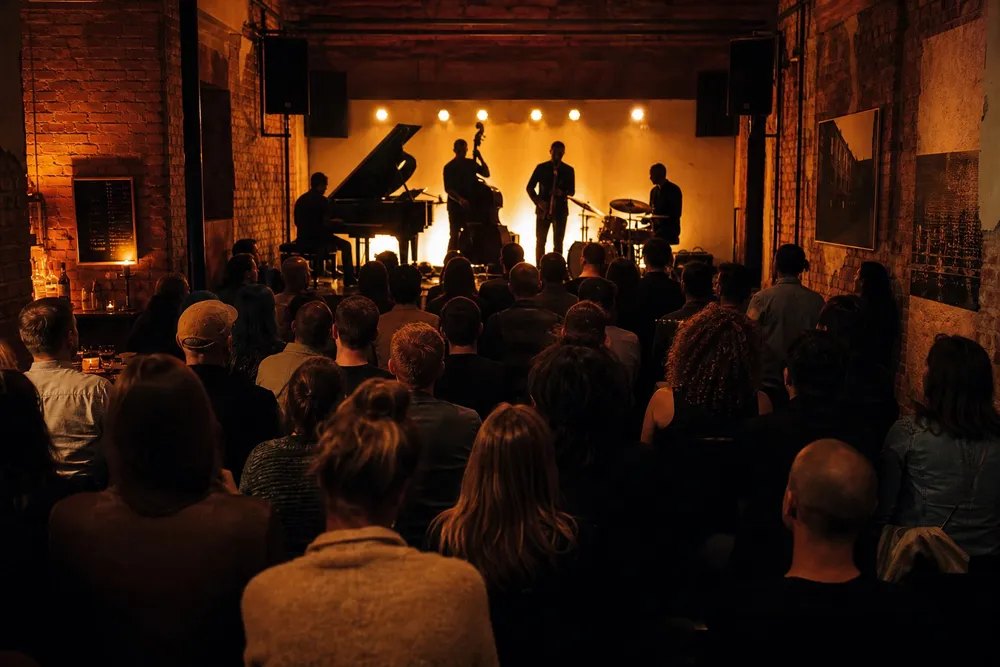
Markus Ehrlichs flexible Eingreiftruppe at Donau115. Photo: pm / kuk-nk.de
These two neighborhoods, separated by the Landwehrkanal, are where Berlin's jazz culture is most alive. Not the polished, institutional version. The real thing: musicians running their own spaces, century-old bars with donation-based concerts, micro venues where you can count the seats on two hands.
Kreuzberg has history. Neukölln has the new energy. Between them, you'll find everything from 1920s swing to free improvisation that hasn't been invented yet.
For the full citywide picture, including venues in Mitte and Charlottenburg, see our complete guide to jazz in Berlin.
Yorckschlösschen: 125 Years of Music on Yorckstraße
The Yorckschlösschen (Yorckstraße 15, Kreuzberg) has been here since 1900. That's not a heritage plaque on an otherwise renovated space. The dark wood, the dim lighting, the worn-in feel of the place, all of it is real, accumulated over more than a century of people coming here to eat, drink, and listen.
Live music runs Wednesday through Saturday. The focus is traditional: jazz, blues, swing, soul, funk. The bands pass a hat ("Die MusikerInnen sind arm aber sexy," the website reads, musicians are poor but sexy), so bring cash and be generous. These are working musicians playing in a room that's been hosting them since before jazz existed as a word.
The kitchen serves central European food at fair prices, but it's small and gets slammed on concert nights. If you want to eat, arrive at least an hour before showtime and get your order in early. They stop taking food orders at 20:00 during events.
In summer, the large garden out back is one of Kreuzberg's great secrets. Shady trees, cold Kreuzberger Kiezbier on tap, and on warm evenings the music drifts out from inside. Reservations are recommended for concerts. Book a few days ahead if you can.
Getting there: U7 Yorckstraße or Mehringdamm, both a short walk.
Donau115: Europe's Smallest Great Jazz Club
Seventy-five square meters. That's the whole venue. A bar, a small stage with a piano and drums, some wooden chairs behind a large window front, and nothing else. The room itself has a story: it survived the bombing in WWII while the floors above were destroyed and rebuilt. What remains is one of the most important jazz rooms in Europe. The Guardian named Donau115 one of the continent's best jazz clubs, and anyone who's sat in that room on a good night knows why.
Run by Chad Matheny and Niklas Alt since 2012, the programming covers serious ground. On any given week you might hear straight-ahead post-bop from a Berlin quintet, experimental compositions that owe more to Zappa than Coltrane, or scrappy acoustic sets that defy categorization entirely.
Two recurring nights worth knowing: Two-Song Tuesday is an open mic where musicians get exactly two songs to make their case. Low-key and often surprising. Thursday is the weekly jazz jam, house band from 8 PM, open stage from 9 PM. Both are covered in detail in our jam sessions guide.
The intimacy is the whole point. You're close enough to the musicians to see their fingers on the keys. The vibe is pure Neukölln: unpretentious, international, and more interested in the music than the scene around it.
Getting there: U7 Rathaus Neukölln, then a 5-minute walk down Donaustraße.
Sowieso: Berlin's Living Room for Improvised Music
If Donau115 is where jazz meets everything else, Sowieso (Weisestraße 24, Neukölln) is where jazz dissolves into pure sound. This small space has been a home for free improvisation and experimental music since 2008, now run by the WieMusik e.V. collective since 2021.
The programming here is no joke. A glance at the current calendar reads like a who's who of European improvised music: Alexander von Schlippenbach on piano, Rudi Mahall on bass clarinet with Die Enttäuschung, cellist Okkyung Lee, the great vocal improviser Phil Minton, Kit Downes, Tony Buck. Nick Dunston runs his "Divide by Zero" series here, bringing together international improvisers in new configurations every month.
Doors open at 20:00, music starts at 20:30. Entry is by donation, which means there's genuinely no barrier to walking in and hearing world-class improvised music on any given night. This is the kind of place where musicians play for each other as much as for the audience, and if you're curious about the outer edges of what jazz can be, there's nowhere better in Berlin.
A word of calibration: Sowieso is not background-music territory. This is active listening. Some nights will challenge you. That's the point.
Getting there: U8 Boddinstraße, short walk.
Peppi Guggenheim International: The Neukölln Kneipe That Programs Like a Festival
Peppi Guggenheim (Weichselstraße 7, Neukölln) is, on the surface, a corner bar. Opens at six, cheap draft beer, smoking allowed inside, locals chatting at the counter. Then Friday rolls around and suddenly there's a five-piece jazz ensemble playing original compositions to a room that's gone completely quiet.
Jazz and experimental music concerts happen most Fridays and Saturdays, and they're free. A hat goes around at the end of the gig, usually around 23:30. The concerts are professionally recorded, filmed, and live-streamed, which the bands appreciate and which gives Peppi an outsized footprint for a neighborhood bar.
The programming is eclectic: free jazz one week, experimental rock-jazz trios the next, drag shows hosted by the brilliant Prince Gabriel. When Peppi faced financial trouble in 2025, twenty jazz musicians from the Berlin and international scene came together for a solidarity festival at Beach Neukölln. Rudi Mahall, Peter van Huffel, Olga Reznichenko, and more, all playing for free to keep the doors open. That tells you everything about what this place means to the community.
Thursday nights are DJ sets (jazz, experimental, krautrock on vinyl). First Monday of the month is PeppiOke. But Friday and Saturday are the main draw.
Getting there: U7 Rathaus Neukölln, 3-minute walk.
Also Worth Knowing
Two more spots in the area that aren't jazz clubs per se but regularly cross paths with the scene:
Arkaoda (Karl-Marx-Platz 16-18, Neukölln) started in Istanbul and brought that city's anything-goes music spirit to Berlin. The programming spans electronic, post-punk, krautrock, and dub, but jazz acts turn up regularly. When they do, it's usually the genre-bending kind.
Soulcat (Pannierstraße 53, Neukölln) is a vinyl-only bar in Reuterkiez spinning soul, R&B, blues, swing, and garage from the 50s and 60s. Not live jazz, but if you're in the neighborhood and want to hear the music that jazz grew up alongside, played on original pressings, this is the spot. Cash only, open Monday through Saturday from 18:30.
Planning Your Night Out
If you're doing a jazz crawl through these neighborhoods, here's a rough framework.
Start early at Yorckschlösschen (shows from around 20:30) for traditional jazz with dinner. After the set, head south across the canal into Neukölln. Donau115 and Peppi Guggenheim both program shows that run from around 20:00 until late. On donation nights at Sowieso, you can catch a 20:30 set and still make a late show elsewhere.
The whole area is well connected by the U7 and U8 lines, and most venues are bikeable from each other in 10-15 minutes.
For a broader view of the city's jazz scene, read our complete guide to jazz in Berlin. And if you want to sit in or just watch others jam, our guide to jazz jam sessions covers every regular session in the city.
See you out there.