Free Jazz in Berlin: Experimental & Avant-Garde Music Guide 2026
Berlin's free jazz and experimental improvisation scene is one of the best in the world. Here's where to hear it, who to watch, and how to listen.
Free Jazz in Berlin: A Guide to the City's Experimental Scene
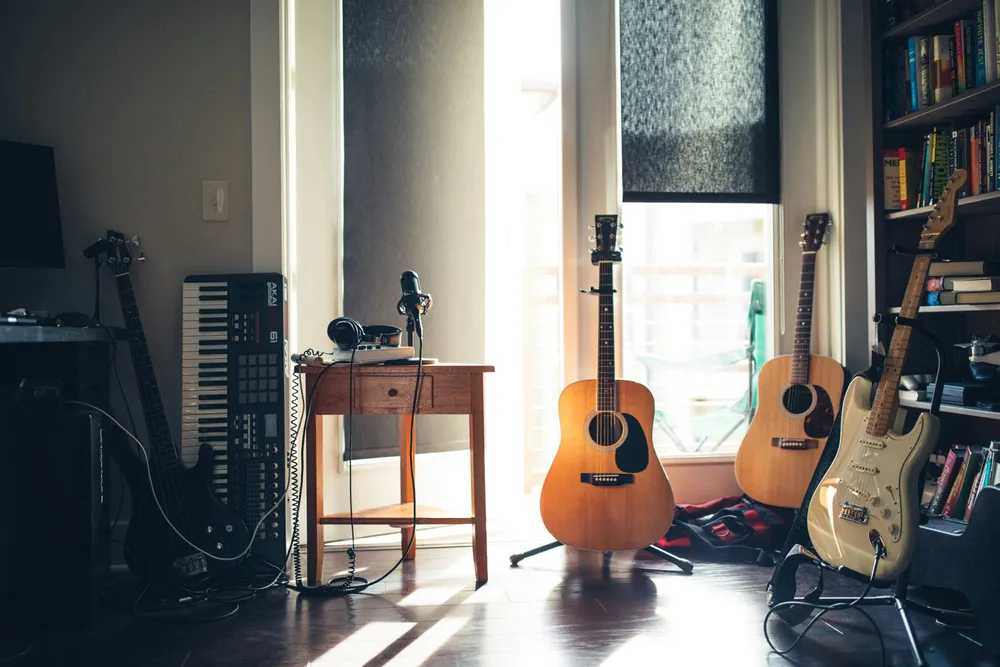
Porta Chiusa | Quentin Tolimieri at KM28, Berlin. August 2021.
There's a moment in a free jazz set where the whole room tilts. The saxophone player has abandoned anything resembling melody, the drummer is treating the kit like a landscape to explore rather than a rhythm machine, and you can't tell if what you're hearing is chaos or the most intense communication you've ever witnessed. Then something locks in, not a groove exactly, but a collective gravity, and you realize every person on stage is listening harder than you've ever listened to anything.
That's free jazz. And Berlin is one of the best cities on the planet to hear it.
This isn't background music. It isn't comfortable. But if you've ever wondered what happens when skilled musicians abandon the rules and build something from nothing in real time, Berlin's experimental improvisation scene will answer that question several nights a week, often for less than the price of a cocktail.
What Free Jazz Actually Is
Free jazz emerged in the early 1960s when musicians like Ornette Coleman, late-period John Coltrane, and Cecil Taylor started asking what would happen if you threw out chord progressions, fixed tempos, and predetermined structures entirely. The answer turned out to be one of the most radical developments in twentieth-century music.
If you're used to jazz standards or even adventurous post-bop, free improvisation sounds like a different art form. That's because it kind of is. Instead of melody and harmony, you're listening for texture: how sounds interact and layer. Instead of rhythm, you're tracking dynamics: the push between tension and release, density and silence. Instead of solos backed by a rhythm section, you're hearing collective improvisation, everyone responding to everyone, constantly.
It's not random noise. That's the most common misconception. The musicians are making hundreds of micro-decisions per minute, drawing on deep technical skill and decades of listening. The structure is just emergent rather than predetermined.
If you want an entry point before your first show, start with Ornette Coleman's Free Jazz (1961), the record that named the genre. Then try Albert Ayler's Spiritual Unity (1964), which is raw, spiritual, and short enough to not overwhelm. If you want something closer to what you'll hear in Berlin's venues today, Peter Brötzmann's Machine Gun (1968) is the European free jazz landmark: eight musicians, maximum intensity, recorded in one take.
Why Berlin Is the City for This
The short answer is history, infrastructure, and audiences.
The longer answer starts during the Cold War. West Berlin, walled in and isolated, became a magnet for artists, draft-dodgers, and anyone looking for creative freedom at the margins. Experimental music found a home in that hothouse. When Peter Brötzmann got uninvited from the Berliner Jazzfest in 1968, he and the musicians around FMP (Free Music Production) responded by founding their own festival, the Total Music Meeting, which ran for over three decades and became the most important platform for European free jazz.
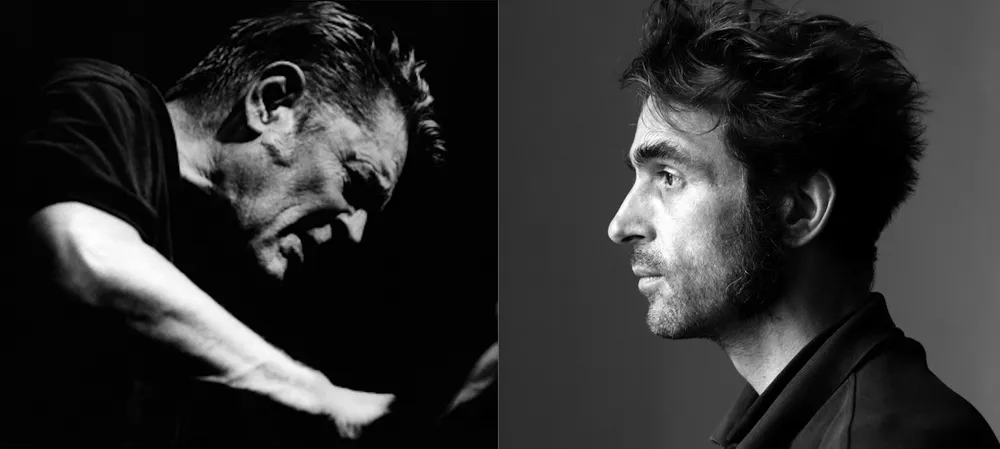
Poster for the Total Music Meeting 1981, Quartier Latin, Berlin.
That infrastructure never disappeared. In the 1990s, a new generation of musicians in Berlin developed what became known as Echtzeitmusik, literally "real-time music," a scene rooted in free improvisation but deliberately distinct from the older free jazz tradition. Where Brötzmann's generation favored intensity and volume, Echtzeitmusik explored quietness, texture, and the edges of silence. The two traditions have been cross-pollinating ever since.
The result is a city where experimental improvised music has a real audience. People show up to listen. Venues exist specifically for this music. Sound engineers know how to mic a prepared piano. And musicians from around the world relocate here because Berlin lets them focus on their work rather than hustling to survive. The scene connects outward to Amsterdam, London, Scandinavia, Chicago, and Japan, but the density of what's happening here, on any given week, is hard to match anywhere.
For the broader context of Berlin's jazz ecosystem, including the clubs, the history, and the full range from straight-ahead to avant-garde, check our Jazz in Berlin: The Complete 2026 Guide.
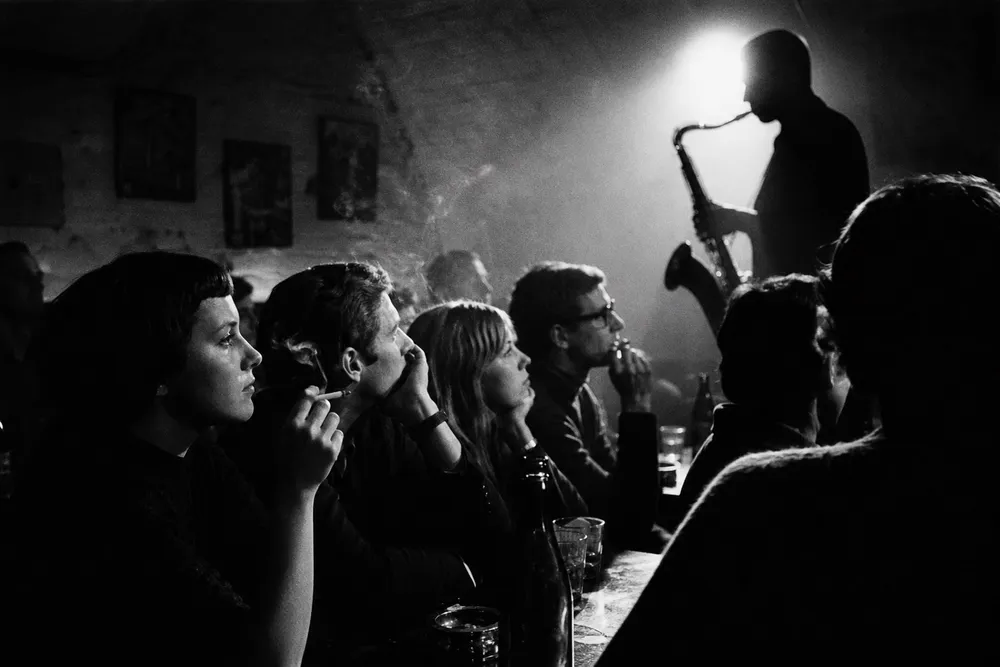
Where to Hear Free Jazz in Berlin
Sowieso
Weisestraße 24, Neukölln. Doors 20:00, concerts 20:30. Entry by donation.
Sowieso is the beating heart of Berlin's free improvisation scene, and it doesn't look like much. It's a Neukölln bar with no stage, minimal amplification, and musicians set up in the corner. The beer is cheap. The couch might be broken. None of that matters.
What matters is the programming. On any given week you might catch Die Enttäuschung, the long-running quartet of Rudi Mahall (bass clarinet), Axel Dörner (trumpet), Jan Roder (bass), and Kasper Tom (drums), a group that started in the mid-90s playing nothing but Thelonious Monk compositions and has since evolved into one of Berlin's essential free jazz ensembles. Or you might see Alexander von Schlippenbach, the pianist who recorded every single Monk composition as the three-disc Monks Casino on Intakt Records, playing a trio set for his birthday. Or Biliana Voutchkova releasing a new record for string trio on Relative Pitch. These aren't hypotheticals: all three of those shows are on Sowieso's schedule in the next few weeks.
The intimacy is the point. You're two meters from musicians who have 150 recordings between them, and you got in for whatever you could put in the donation box.
Fri, 27 Feb · 20:30
Die Enttäuschung
Sowieso Berlin
Donau115
Donaustraße 115, Neukölln. Entry €5–10 sliding scale.
If Sowieso is the living room, Donau115 is the studio. It's a musician-run space with better sound, more intentional acoustics, and curated programming that ranges across the full experimental spectrum. You're more likely to hear composed experimental music here, pieces with structure and form that still leave major space for improvisation, alongside pure free sessions.
Donau115 also hosts a weekly Thursday jazz jam that pulls from Berlin's improvisers across styles, making it a good entry point if you want to ease into the scene before committing to a full evening of free improv. For more on Berlin's jam sessions, see our weekly jam session guide.
Ausland
Lychener Straße 60, Prenzlauer Berg. Entry €5–10.
Ausland has been hosting experimental music for over two decades, and it operates with zero commercial concerns. This is not a bar with music. It's a listening room that happens to serve drinks. The space is small, the bookings are impeccable, and the audience knows exactly what they came for. If there's a touring European improviser you should hear, chances are they'll pass through Ausland.
KM28
Karl-Marx-Straße 28, Neukölln. Doors 20:00, start 20:30. Entry by donation.
KM28 might be the most focused experimental music space in the city. The programming is uncompromising: microtonal guitar, spectral sound synthesis, prepared instruments, electro-acoustic composition. When Fred Frith, a figure who has shaped improvised music since the 1960s, plays Berlin, he plays KM28. When Ōtomo Yoshihide brings his turntable trio from Tokyo, it's at KM28. When Sam Dunscombe and Judith Hamann present solo sets of cello with voice and tape alongside spectral electronics, that's a Tuesday night here.
The space operates entirely on donation, which means the programming answers to nothing but artistic ambition. It also sits firmly in the territory where free improvisation, contemporary composition, and sound art overlap, so if you're coming from a new music or sound art background rather than a jazz one, KM28 might feel like the most natural entry point into Berlin's improvised music world.
Mon, 23 Feb · 20:30
Jules Reidy & Sam Dunscombe
KM28
Exploratorium Berlin
Zossener Straße 24, Kreuzberg.
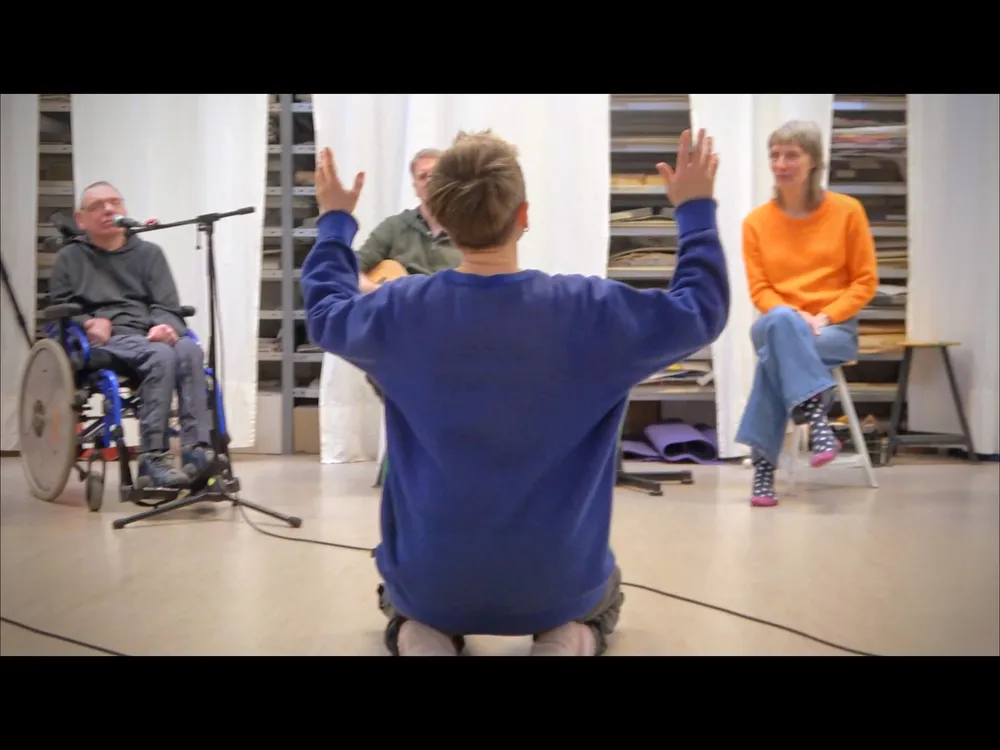
The Exploratorium occupies a unique position in Berlin's experimental music world. It's part venue, part workshop space, part community hub, dedicated explicitly to free improvisation across music, dance, theater, and visual art. Their concert programming features serious experimental music, but they also run workshops and courses that let you participate in improvisation yourself, even without prior experience.
Their imp[or]trait discussion series is worth noting too: it engages critically with jazz culture and its histories. The upcoming edition honoring the late jazz critic Christian Broecking is a reminder that this scene thinks about itself with real intellectual depth.
![imp[or]trait #13: In memoriam Christian Broecking](https://images.traube.club/307ba7f8-5945-4a17-9bc1-37ccf4808089/thumbnail.webp)
Thu, 26 Feb · 20:00
imp[or]trait #13: In memoriam Christian Broecking
exploratorium berlin
Morphine Raum
Köpenicker Straße 147, Kreuzberg. Usually €5–8.
Morphine Raum comes from the electronic and experimental music world, but they regularly book free jazz and electro-acoustic improvisation. This is where the line between free improvisation and electronic music blurs or disappears entirely: laptop and saxophone duos, modular synth alongside acoustic bass, processed trumpet feeding back into the room. If the intersection of improvised music and electronics interests you, start here.
Kunstfabrik Schlot
Invalidenstraße 117, Mitte. Entry €8–15.
Schlot programs across the jazz spectrum, from straight-ahead to fully experimental, and when they lean into the avant-garde, they commit. The audience tends toward Berlin's arts crowd: people who also see contemporary theater and know their way around new music. It's a more formal setting than the Neukölln venues, but the programming can be just as adventurous.
The Artists You Should Know
Berlin's free jazz scene isn't a faceless collective. These are some of the names you'll encounter most often, and knowing their work will deepen what you hear.
Axel Dörner plays trumpet, though that word barely covers it. Born in 1964, trained classically in Cologne (he studied with the great Jon Eardley), Dörner moved to Berlin in 1994 and spent the late 90s developing a completely new language for the instrument: breath sounds, valve clicks, multiphonics, feedback, textures that don't sound like trumpet at all but are produced with absolute control and intention. He's a co-founder of Die Enttäuschung, a member of the Globe Unity Orchestra, and has over 150 recordings to his name. He won Berlin's Jazz Prize in 2019. If you see his name on a bill, go.
Rudi Mahall plays bass clarinet with a ferocity and humor that makes him one of the most distinctive voices in European free jazz. Also a founding member of Die Enttäuschung, Mahall can shift from sharp angular lines to pure noise to something unexpectedly lyrical within a single breath. His duo work with Dörner is some of the most concentrated improvisation you'll hear in the city.
Alexander von Schlippenbach is a pianist and one of the founding figures of European free jazz. He's been active since the 1960s, led the Globe Unity Orchestra, and recorded Monks Casino, the monumental three-disc set covering every single Thelonious Monk composition, with the Die Enttäuschung lineup. He still performs regularly at Sowieso and elsewhere in Berlin. His playing is restless, harmonically dense, and unpredictable even after sixty years of doing this.
Biliana Voutchkova is a Bulgarian-born, Berlin-based violinist who pushes the instrument into territory most violinists wouldn't recognize, let alone attempt. She works as a soloist and with ensembles like the Splitter Orchester, and her playing explores the physicality of sound itself: bowing pressure, wood and string, resonance and friction. Her upcoming record release at Sowieso with cellist Isidora Edwards and Zosha Warpeha on hardanger d'amore is exactly the kind of event that defines this scene.
Tobias Delius (saxophone), Jan Roder (bass), and Michael Griener (drums) are three more names that come up constantly on Berlin bills. Delius, a Dutch saxophonist, has been embedded in the scene forever and plays with nearly everyone. Roder is one of the most in-demand bassists in experimental music. Griener brings a deeply musical, textural approach to the drum kit.
Beyond the residents, Berlin regularly draws international visitors: Phil Minton, the British vocalist whose extended vocal techniques are genuinely unclassifiable (he's at Sowieso in March). Ken Vandermark, the Chicago saxophonist who tours through frequently. Tony Buck, the Australian percussionist from The Necks, who's practically a Berlin resident himself at this point. When these names appear, the shows tend to be special.
How to Listen (and What to Expect)
If your jazz listening starts and ends with standards, free improvisation will feel disorienting at first. That's fine. Here's what actually helps.
Stop listening for melody. Listen instead for texture: how sounds interact, build density, create space. Pay attention to dynamics, the movement between loud and quiet, tense and relaxed. Watch how the musicians respond to each other. In a free improv set, every player is simultaneously performing and listening, and when you start to hear that conversation, the music opens up.
Seeing it live helps enormously. You can watch the physical effort of extended techniques, the eye contact and body language between musicians, the moments where someone introduces an idea and the group decides whether to follow it or push against it. A recording of free jazz is a document. A live set is the thing itself.
Practically: shows are usually small (10 to 50 people), deeply focused, and quiet between the sounds. Silence your phone completely. Don't talk. Sets can run anywhere from 20 minutes to 90, sometimes without breaks. Bring earplugs if you're sensitive to volume, because a Brötzmann-lineage saxophonist at full bore in a small room is no joke.
And if a show doesn't click for you, that's fine. Some won't. The musicians aren't trying to please everyone. Come back next week and try a different combination of players. That's how this works.
Records to Start With
Going to your first free jazz show cold is a bold move. These records will give you context and calibrate your ears.
The origin points: Ornette Coleman's Free Jazz (1961) is the founding document, a collective improvisation for double quartet that still sounds radical. Albert Ayler's Spiritual Unity (1964) is raw, ecstatic, and only 30 minutes long. John Coltrane's Ascension (1966) is the moment the most famous jazz musician alive walked into the fire.
The European lineage: Peter Brötzmann's Machine Gun (1968) established the intensity and collectivism of European free jazz in one session. Evan Parker's solo soprano saxophone work, try Process and Reality (1991), is a masterclass in circular breathing and multiphonics that sounds like nothing else in music. Derek Bailey's Ballads (2002) does something perverse and brilliant: free improvisation applied to jazz standards, deconstructing "My Funny Valentine" until it becomes something entirely new.
From the Berlin scene itself: the three-disc Monks Casino (2005) by Schlippenbach, Dörner, Mahall, Roder, and Jennessen is essential. It's every Monk composition filtered through free improvisation, and it's both a love letter to Monk and a statement of independence from him. For the Echtzeitmusik side, look for recordings on labels like Erstwhile, Another Timbre, and Relative Pitch, which document Berlin's quieter, more textural improvisation tradition.
Beyond the Clubs
Free jazz in Berlin also happens outside established venues. The Echtzeitmusik network organizes events in galleries, studios, and temporary spaces around Neukölln and Wedding. Musicians host house concerts (ask around if you're in the scene). Art gallery openings sometimes feature live improvisation. And the line between "venue" and "someone's project space with good acoustics" is thin in this city.
The Echtzeitmusik scene remains one of Berlin's most active creative communities, with concerts happening almost every night across the city. Follow the Echtzeitmusik page on Traube to stay on top of upcoming shows, or check the Echtzeitmusik website for full listings.
See you out there.
For the full picture of Berlin's jazz scene, head to Jazz in Berlin: The Complete 2026 Guide.